
When it comes to maintaining safe, crystal-clear pool water, accurate testing isn’t optional, it’s essential. And if you’ve spent any time researching water testing methods, you’ve likely encountered the DPD tablets vs liquid reagents debate. Both methods measure free chlorine levels using the same chemistry (N,N-diethyl-p-phenylenediamine, if you want to get technical), but they go about it in different ways. So which one actually delivers better results for your pool?
We’ve worked with commercial pool operators across metro Denver and the Front Range for years, and this question comes up constantly. The truth is, there’s no universal “best” option, the right choice depends on your specific situation, testing frequency, and operational needs. In this guide, we’ll break down both methods, explore their strengths and weaknesses, and help you determine which one makes the most sense for your pool testing routine.
Understanding DPD Testing Methods
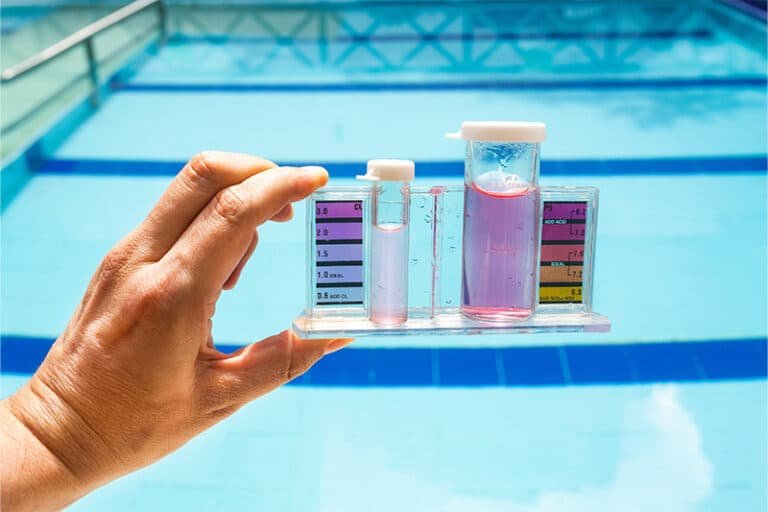
Before we jump into the comparison, let’s get clear on what DPD testing actually does. DPD reagents, whether in tablet or liquid form, react with free chlorine in your pool water to produce a pink or magenta color. The intensity of that color directly corresponds to the chlorine concentration. Darker pink means more chlorine: lighter pink means less.
This colorimetric method has been the gold standard for pool water testing for decades. It’s reliable, relatively simple, and doesn’t require expensive electronic equipment to get accurate readings. Most pool operators use a comparator or photometer to match the color against a standardized scale, giving you a precise parts-per-million (ppm) reading.
Both DPD tablets and liquid reagents use the same fundamental chemistry. The difference lies in how the reagent is packaged and delivered into your water sample. Tablets are pre-measured, compressed doses of the reagent. Liquid reagents come in dropper bottles, allowing you to add precise drops to your sample. Each format has distinct advantages depending on how and where you’re testing.
For commercial pools especially, understanding these differences matters. Health departments require accurate chlorine readings, and the method you choose can affect both the consistency and efficiency of your testing process.
Advantages of DPD Tablets
DPD tablets have earned a loyal following among pool professionals, and for good reason. They offer several practical benefits that make them particularly attractive for certain testing scenarios.
Longer Shelf Life and Stability
One of the biggest advantages of DPD tablets is their impressive shelf life. When stored properly in a cool, dry place away from direct sunlight, quality DPD tablets can remain stable and accurate for 3-5 years. That’s significantly longer than most liquid reagents, which typically need replacement every 1-2 years.
This extended stability comes from the tablet’s solid form. The reagent chemicals are compressed and protected from air and moisture, two factors that degrade liquid reagents over time. For pool operators who don’t test as frequently or who like to keep backup supplies on hand, tablets offer peace of mind that your testing materials will be ready when you need them.
The stability factor also matters if you’re testing in challenging environments. Tablets hold up better in extreme temperatures during transport and storage compared to liquids, which can separate or degrade more quickly when exposed to heat or freezing conditions.
Ease of Use and Portability
There’s something undeniably convenient about dropping a single tablet into your test vial and watching it dissolve. No counting drops, no worrying about whether you dispensed the right amount. Each tablet contains a precisely measured dose of reagent, which eliminates one potential source of human error.
Portability is another strong suit. Tablet containers are compact, lightweight, and virtually spill-proof. If you’re testing multiple pools across different locations, common for commercial operators managing several properties, tablets travel well. You won’t arrive at a job site to discover your reagent bottle leaked all over your testing kit.
For staff training purposes, tablets also simplify the process. New team members can learn the testing procedure quickly without mastering the technique of holding a dropper bottle at the correct angle and counting drops accurately. That consistency translates to more reliable results across your team.
Advantages of Liquid Reagents
While tablets have their merits, liquid reagents remain the preferred choice for many high-volume testing operations. Here’s why liquids continue to dominate in certain applications.
Faster Dissolution and Results
Speed matters when you’re testing water multiple times per day. Liquid reagents disperse almost instantly when added to a water sample, producing an immediate color reaction. You can get your reading in seconds rather than waiting for a tablet to fully dissolve, which can take anywhere from 30 seconds to a couple of minutes depending on water temperature and tablet formulation.
This time savings adds up quickly. If you’re running 10-15 tests per day across multiple parameters, shaving even a minute off each test translates to meaningful efficiency gains. For busy commercial pools during peak season, that efficiency can make the difference between staying on schedule and falling behind.
The faster reaction time also reduces the window for error. With tablets, there’s sometimes a temptation to take a reading before the tablet has fully dissolved, which can skew results. Liquids eliminate that variable entirely.
Cost Efficiency for High-Volume Testing
When you’re testing frequently, the economics of liquid reagents start to look pretty attractive. On a per-test basis, liquids typically cost less than tablets, sometimes significantly less for operations running dozens of tests weekly.
Liquid reagent refill bottles also generate less packaging waste compared to individually wrapped or blister-packed tablets. For environmentally conscious operators, this can be a consideration worth factoring into the decision.
Another cost-related advantage: liquid reagents allow for more flexible dosing. If you need to run a diluted test or adjust for unusual water conditions, you have more control over exactly how much reagent enters your sample. With tablets, you’re locked into the pre-measured dose, which occasionally limits testing flexibility.
Key Factors to Consider When Choosing
Now that we’ve covered the strengths of each method, let’s talk about how to match those strengths to your specific situation.
Testing Frequency and Pool Size
How often do you test? This single question often points toward the right answer.
For commercial pools with high bather loads requiring multiple daily tests, liquid reagents usually make more sense. The speed advantage compounds over time, and the lower per-test cost helps manage operational expenses. Large aquatic facilities, water parks, and busy hotel pools typically fall into this category.
On the other hand, if you’re testing once or twice daily, or even less frequently, tablets offer simplicity without sacrificing accuracy. Smaller commercial pools, seasonal facilities, or properties with lower usage often find tablets perfectly adequate for their needs.
Pool size also plays a role, though perhaps not in the way you’d expect. It’s less about gallons of water and more about testing volume. A large pool tested twice daily might still be a good candidate for tablets, while a small therapy pool tested hourly would benefit from liquid reagents.
Storage Conditions and Climate
Where and how you store your testing supplies matters more than many operators realize.
If your storage area experiences temperature extremes, think unheated pool sheds in Colorado winters or equipment rooms that bake in summer heat, tablets generally hold up better. Their solid form provides natural protection against the degradation that affects liquids in less-than-ideal conditions.
Humidity is another factor. Liquid reagents in dropper bottles are fairly well-protected, but tablets can absorb moisture if their packaging is compromised. If you’re working in a humid environment, make sure your tablet containers seal tightly and consider storing them in a secondary moisture-proof container.
For operations here in Colorado, we often recommend tablets to clients who store supplies in outdoor or semi-outdoor locations. Our dry climate is actually pretty friendly to both formats, but the temperature swings, especially at higher elevations, give tablets an edge in stability.
Which Method Is Right for You?
Let’s cut to the chase with some practical guidance.
Choose DPD tablets if:
- You test 1-3 times daily or less frequently
- You need portable testing supplies for multiple locations
- Your storage conditions aren’t climate-controlled
- You want simplified training for staff
- You prefer longer shelf life and less frequent reordering
Choose liquid reagents if:
- You’re running 5+ tests per day
- Speed and efficiency are top priorities
- You want to minimize per-test costs at high volume
- Your testing environment is temperature-stable
- You need flexibility for specialized testing scenarios
Of course, there’s nothing stopping you from using both. Some pool operators keep tablets on hand for field testing and portable applications while using liquids at their main testing station. This hybrid approach gives you the best of both worlds.
At The Aqueous Solution, we stock both DPD tablets and liquid reagents alongside a full range of water testing equipment, from basic test kits to electronic pocket meters. Our team can help you evaluate your testing needs and recommend the right supplies for your operation. We’ve been serving commercial pool operators throughout metro Denver and the Front Range of Colorado for years, so we understand the unique challenges our climate and regulations present.
Whichever method you choose, the most important thing is consistent, accurate testing. A well-maintained testing routine, using quality reagents that haven’t expired, protects your swimmers and keeps you compliant with health department requirements.
Conclusion
The DPD tablets vs liquid reagents debate doesn’t have a one-size-fits-all winner. Both methods deliver accurate chlorine readings when used correctly with fresh, properly stored reagents. The “best” choice depends entirely on your testing frequency, operational priorities, storage conditions, and budget considerations.
For most commercial pool operators, the decision comes down to volume and convenience. High-frequency testers benefit from the speed and cost efficiency of liquids. Lower-frequency testers appreciate the stability and simplicity of tablets. And plenty of professionals use both, depending on the situation.
Whatever you decide, don’t skimp on quality. Cheap reagents from questionable sources can produce unreliable results, and when swimmer safety is on the line, accuracy isn’t negotiable. Invest in reputable testing supplies, replace them before they expire, and follow proper testing procedures every time.
Need help selecting the right water testing products for your commercial pool? We’re here to help. Reach out to our team at The Aqueous Solution for personalized recommendations and reliable delivery throughout the Denver metro area and Front Range. Because every problem has an Aqueous Solution.